Quantum-enabled EPR spectroscopy
Access the inaccessible
Static structures miss the motion that dictates biological function. FATHOM® resolves dynamic behavior.
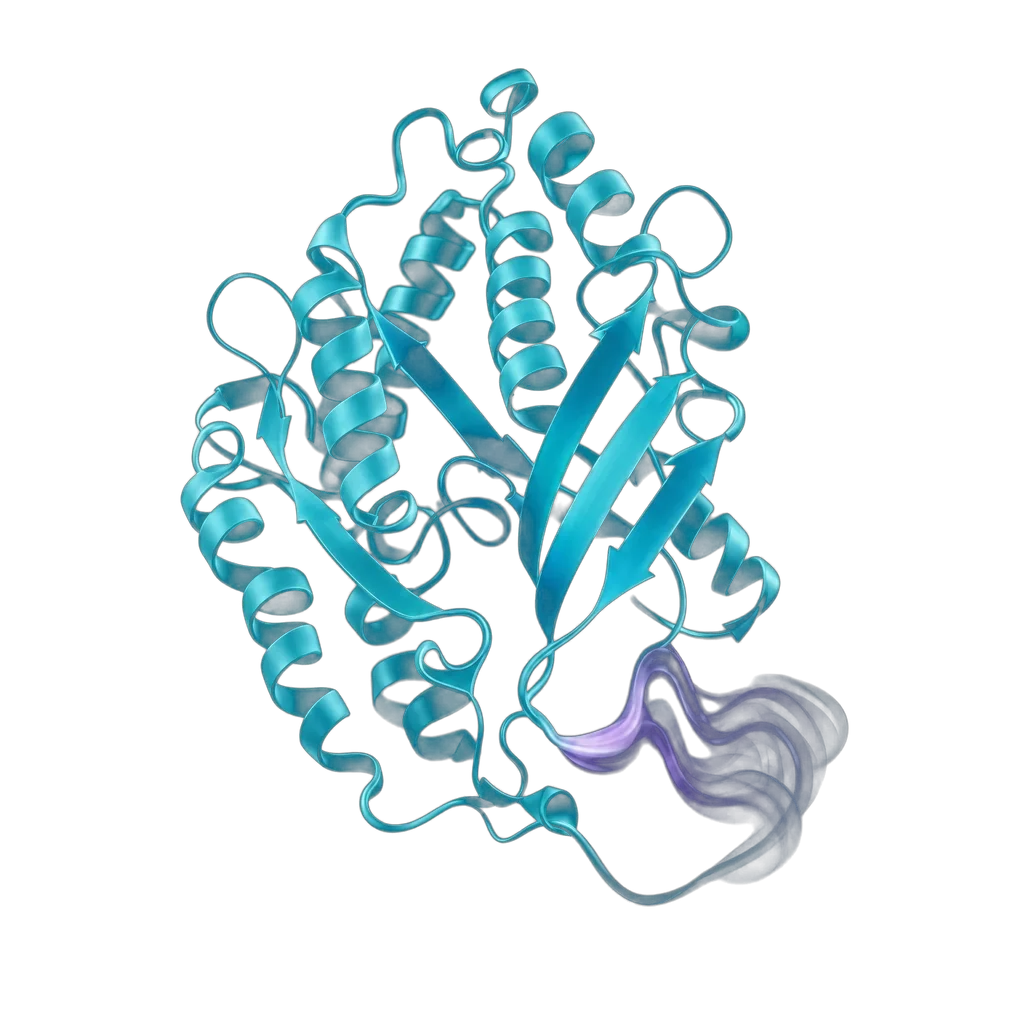
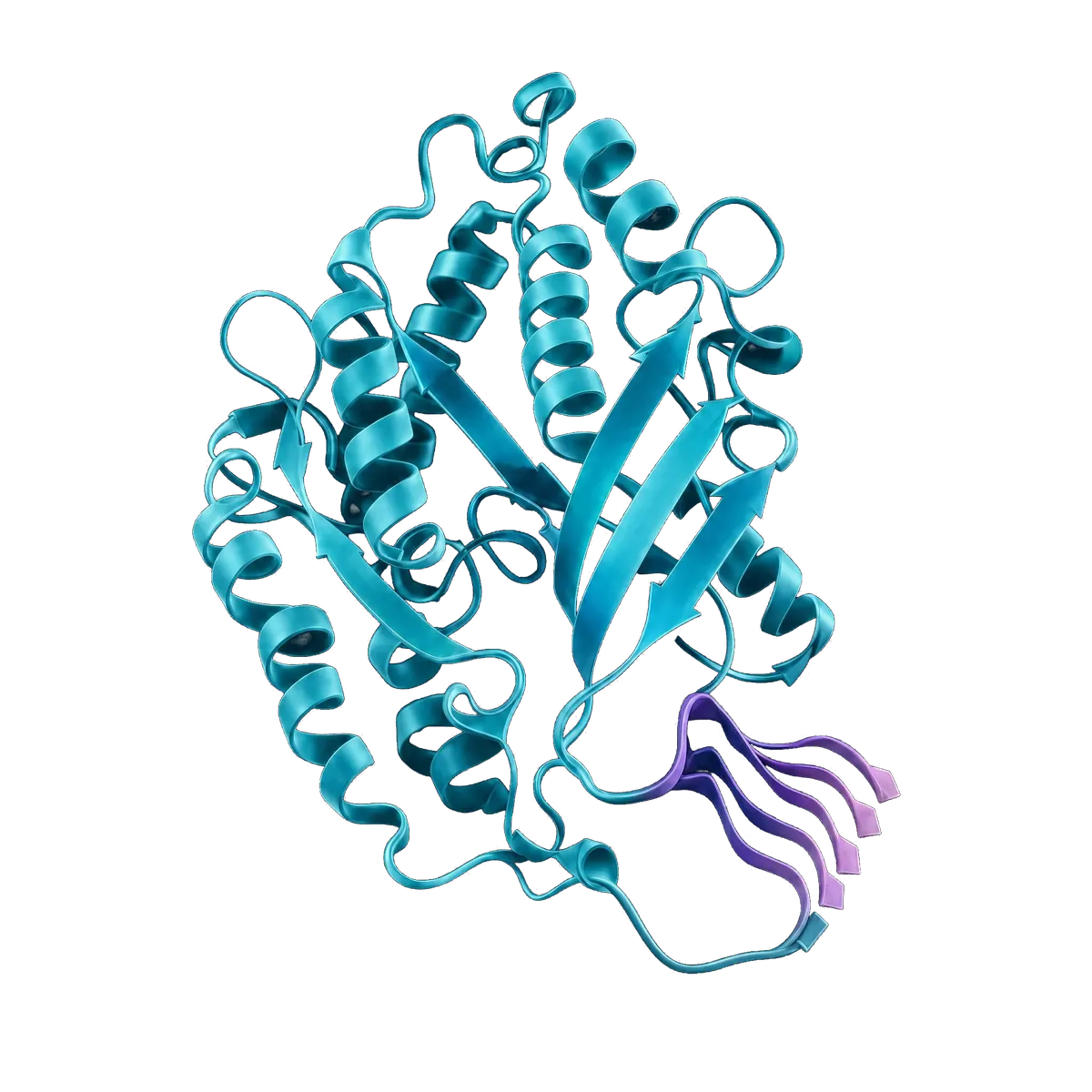
Structure isn't static.
Cryo-EM, NMR spectroscopy, AlphaFold, and X-ray crystallography give you a snapshot. Biological function lives in what the snapshot misses — the loops that flex, the domains that switch, and the conformational ensembles that drive molecular binding and allosteric regulation.
Measure the motion.
FATHOM resolves nanoscale distance distributions and conformational dynamics on micromolar samples, in under a few hours, on an instrument built for the structural biology lab.

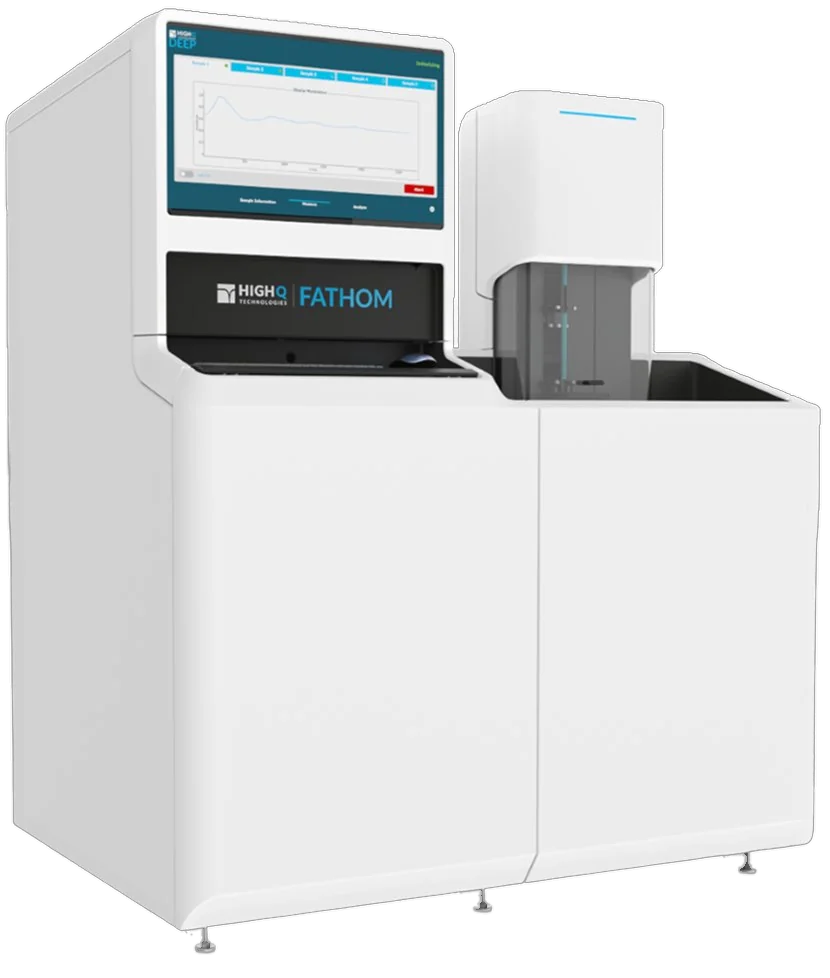
The world's first quantum-enabled EPR spectrometer.
FATHOM measures the protein dynamics that static structural techniques can't resolve — the conformational motion behind binding, signalling, and drug action.
Revolutionizing EPR with Quantum Sensing Technology
Next-generation quantum sensing enhances EPR with greater sensitivity, faster acquisition, and simplified operation. Automated workflows and an intuitive interface enable high-throughput analysis, reducing experiment times from weeks to days.
Superconducting Quantum Sensing
New superconducting quantum-sensing resonator design enables accessible scientific discoveries and higher throughput than classical EPR.
Easy Automated Operation
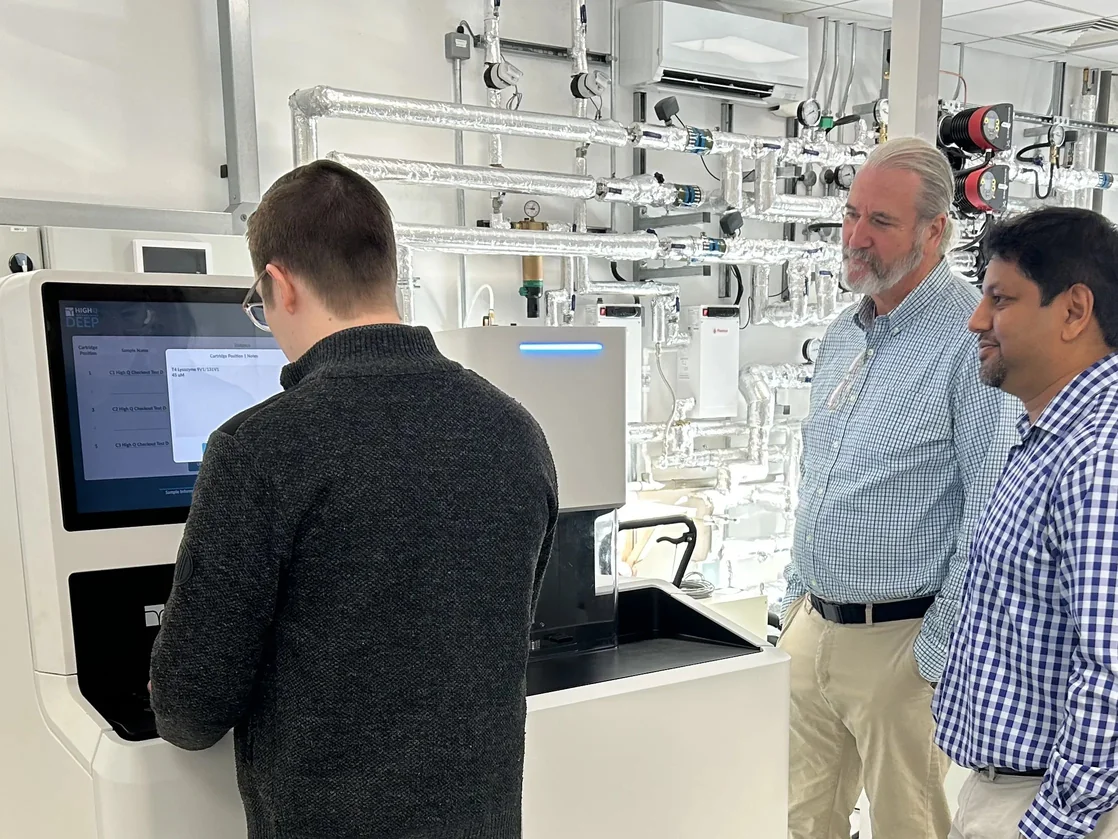
Load-and-go automated reporting, multi-sample handling and an intuitive touchscreen interface designed for technician-level users.
Short Acquisition Times
Increase in sensitivity, speed and stability reduces EPR acquisition time from weeks to days.


Born from quantum research. Built to transform drug discovery.
High-Q Technologies emerged from the Institute for Quantum Computing at the University of Waterloo. Backed by Quantum Valley Investments and guided by scientific advisors from MIT, we are building the measurement infrastructure for the next generation of structural biology.

Protein dimerization is one of the most widespread and functionally important forms of protein–protein interaction. Proteins rarely act in isolation in a biological environment; instead, they associate as homodimers, heterodimers or higher-order oligomers to form functional assemblies. This self-assembly occurs in every cellular compartment, from membranes to the nucleus and cytosol, and regulates processes ranging from enzymatic activation and signal transduction to pathogenic pathways. A dimer observed in a crystal structure, however, may represent either a genuine biological assembly or a contact created by crystal packing. A crystal structure provides detailed information about molecular architecture, but it does not by itself establish whether two molecules associate under relevant solution conditions, how strong that interaction is, or whether the subunits retain the same arrangement outside the lattice. Distinguishing between these possibilities is therefore an important task in structural biology, biophysics and pharmaceutical research, where protein–protein interactions can influence function, stability and the binding of potential drug candidates.
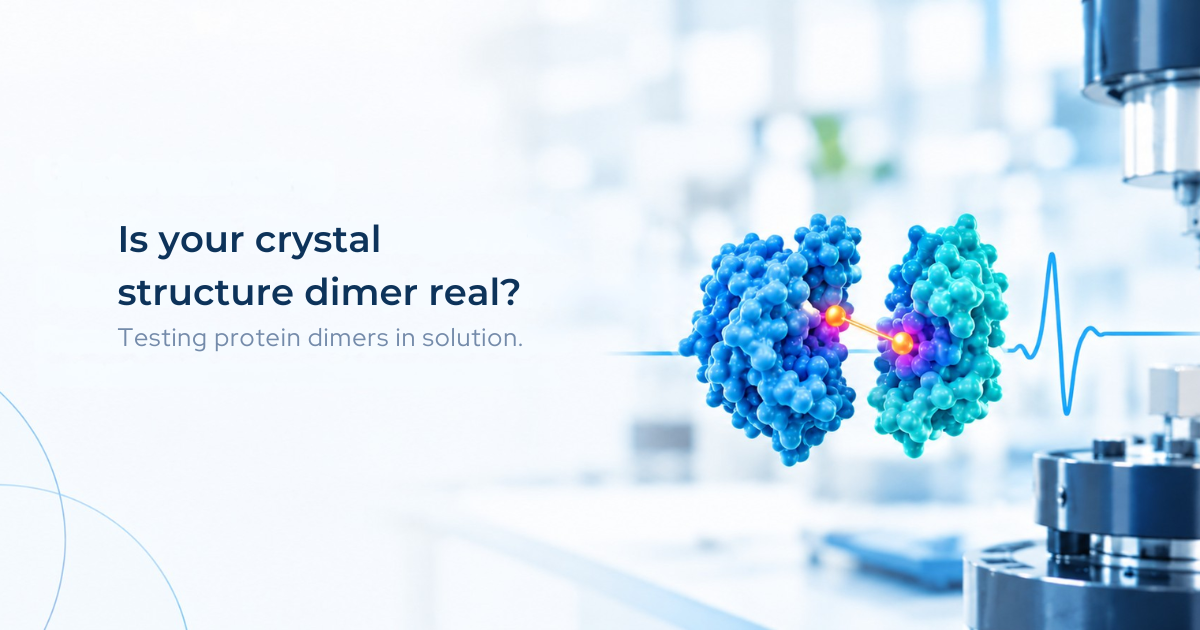
Protein dimerization occurs when two protein molecules associate to form a dimer. A crystal structure can reveal how two protein molecules fit together, identifying an interface that may influence protein function or drug discovery. However, a dimer observed in a crystal does not necessarily represent the dominant assembly in solution. Crystal packing can stabilize contacts that are weak, transient, or absent under physiologically relevant conditions. For pharmaceutical researchers, this distinction matters because a proposed dimer interface may form a binding site, regulate protein activity, or provide a target for small molecules. Before using the structure to guide drug design, researchers need to establish whether the protein associates in solution and whether the arrangement of its subunits is consistent with the proposed model.
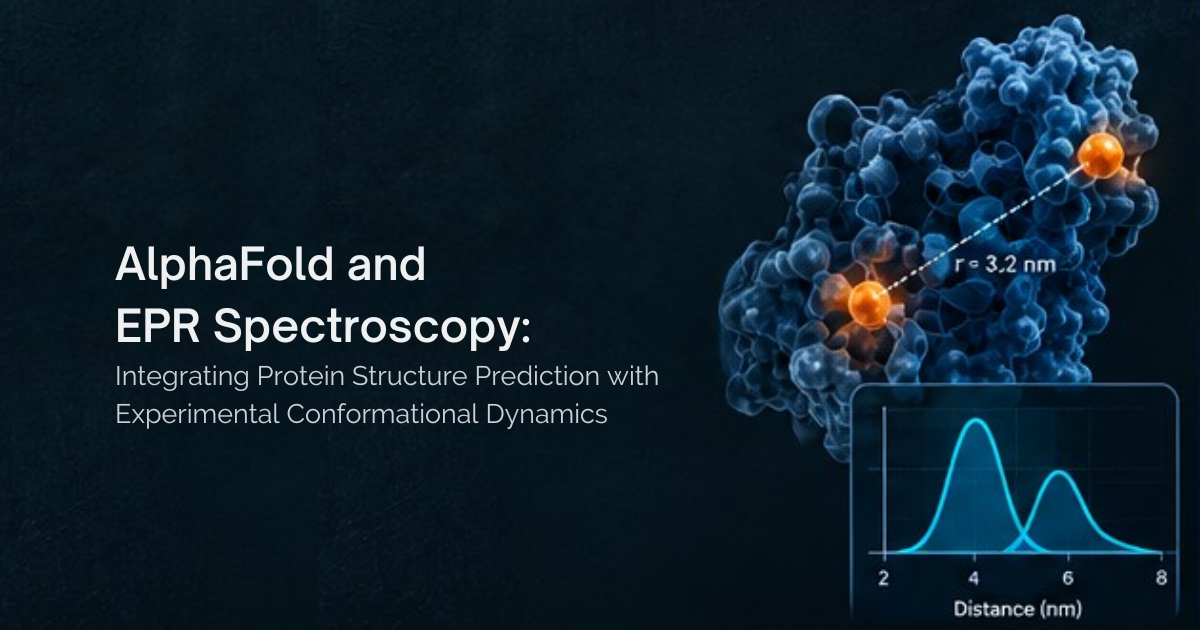
Few tools have changed structural biology as quickly as AlphaFold2. Within a few years of its release, AlphaFold2 had become an important starting point for structural studies of many proteins. However, transporters, receptors, channels and many enzymes function through conformational changes, and ligand binding can shift proteins between different structural states. A single predicted model, however confident, represents one structural state rather than the full range of conformations a protein may populate. This is where Electron Paramagnetic Resonance (EPR) spectroscopy comes in.