Insights from Austin
The latest insights on EPR technology trends, customer successes and industry best practises

Allosteric regulation is a fundamental mechanism of cellular control, enabling proteins to respond to signals at one site and translate them into changes in activity at another, often distant, site. Proteins regulated in this way, known as allosteric proteins, are involved in a wide range of biological processes, including enzyme regulation, signal transduction, cell adhesion and transcription.
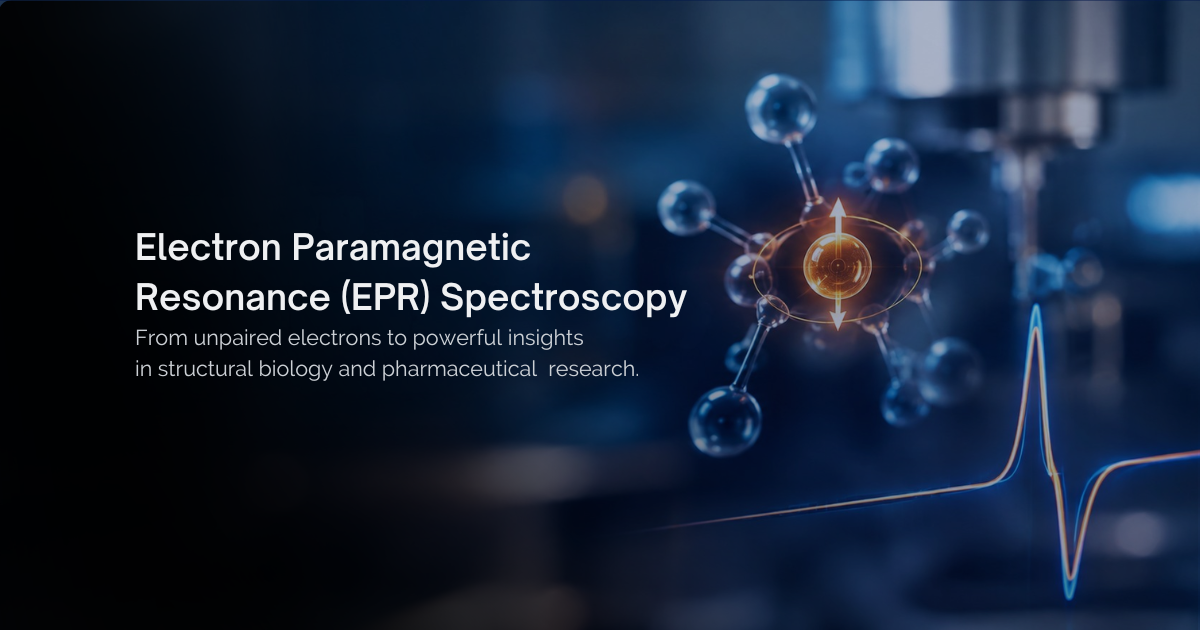
Electron paramagnetic resonance spectroscopy is a powerful way to study materials, molecules, and systems with unpaired electrons. It is often called EPR, ESR, electron spin resonance spectroscopy, or spin resonance spectroscopy.
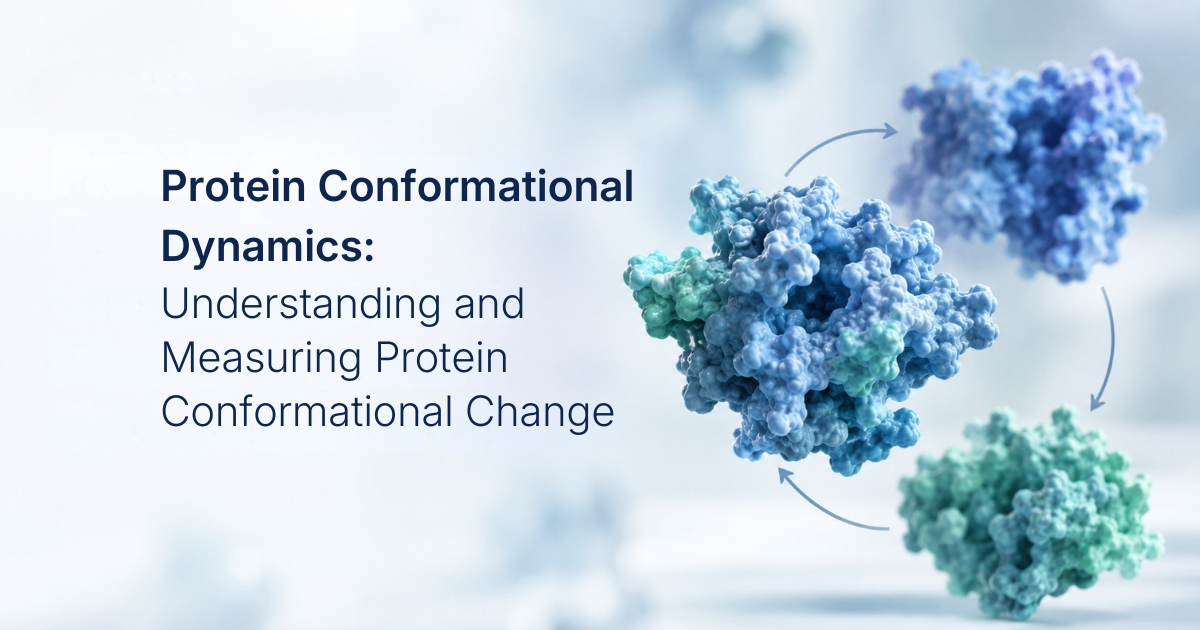
A protein conformational change is often described as a transition from one structural state to another: open to closed, inactive to active, or apo to ligand-bound. That language is useful for describing structural differences, but it can obscure the physical problem that determines how a protein behaves in solution.

Artificial intelligence has changed the starting point for structural biology. Protein structure prediction tools such as AlphaFold can generate highly accurate structural models for many proteins, including proteins for which experimentally determined structures are unavailable.
Science is often about context. An outlier can only be determined in the context of the whole distribution. Experimental data is relevant only in the context of its setup and parameters. Biomolecules adopt different behaviors in the context of their local environment. Similarly, my previous Insights have examined EPR in the context of the broad biophysical (BPS) and the narrower EPR (RSC) communities. Most recently I attended Drug Discovery Chemistry 2023, and accordingly, this entry will be examining EPR in the context of the Drug Discovery workflow. Throughout the many excellent talks and presentations, a few key notes were played on refrain – notes that may sound good on an EPR instrument.

In my inaugural post of Insights, I took a bird’s-eye view of how EPR can fit into the broad and diverse landscape of biophysics – an apt reflection after a meeting of the Biophysical Society. This past week I ventured to Leeds to join the Royal Society of Chemistry’s ESR meeting (EPR and ESR are interchangeable) and for a meeting of such focused subject matter, this reflection will appropriately take a more focused approach.

Despite being still an incredibly niche technique, the current state of EPR is something to be excited about. EPR – electron paramagnetic resonance – is a diverse and robust technique that can unlock biophysical information by measuring nanoscale intramolecular distances, determining localized dynamics, and probing paramagnetic binding environments. Every year talented investigators are using this spectroscopy to discover new information and solve old problems. I had the chance to interact with several such groups and see firsthand the new directions the field is heading.